
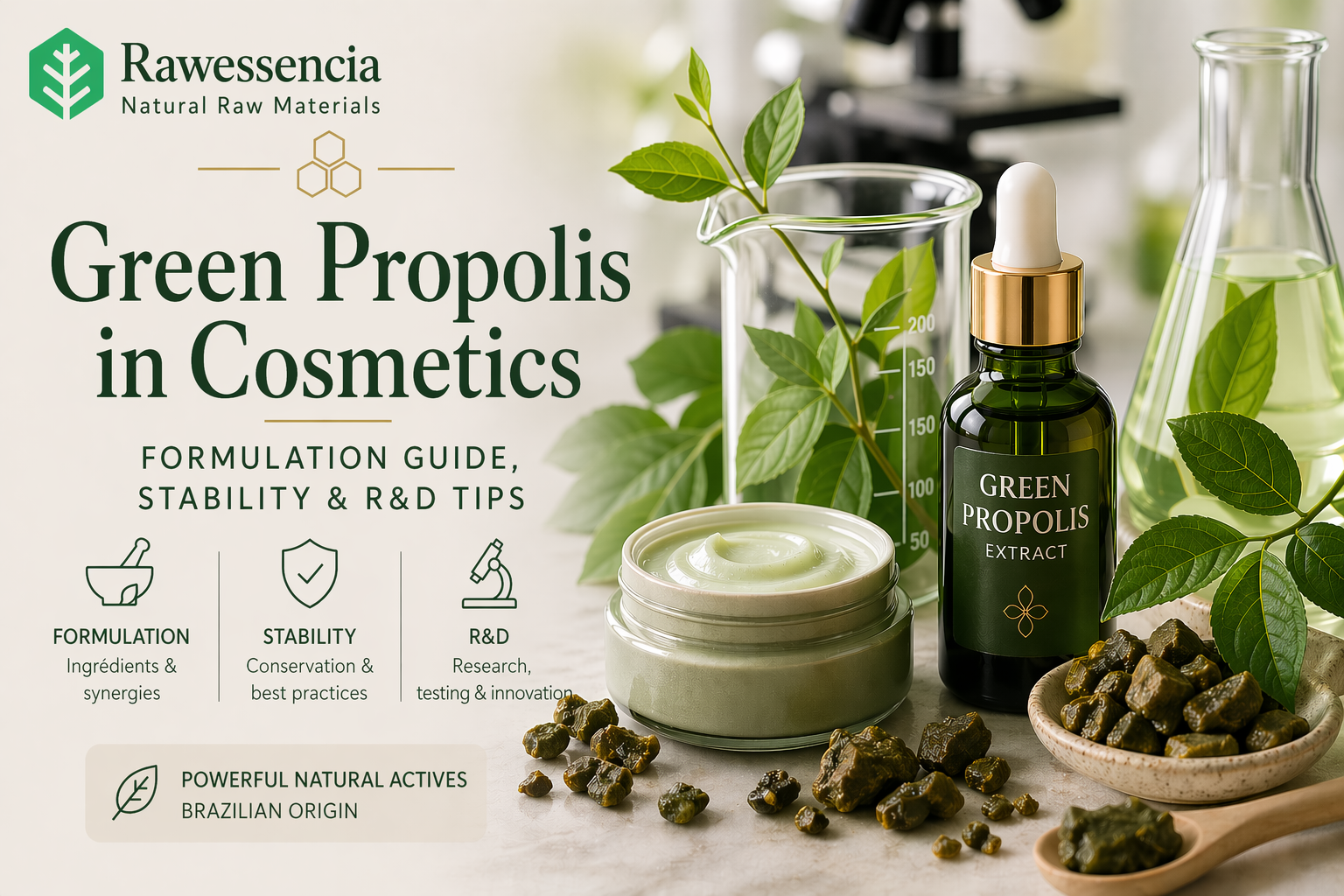
How to Integrate Green Propolis into an Effective Cosmetic Formulation
Green Propolis Cosmetic Formulation: R&D Guide, Stability & Applications
Green Propolis in Cosmetics: A Practical Guide for Formulators
Green propolis cosmetic applications are rapidly expanding as brands seek high-performance natural ingredients. Known for its antioxidant, antimicrobial, and soothing properties, green propolis is a powerful natural cosmetic active for modern skincare formulations.
However, successful green propolis formulation requires a solid technical understanding to fully leverage its benefits.
Why Use Green Propolis in Cosmetic Formulations?
Derived from Baccharis dracunculifolia, green propolis stands out due to:
- high concentration of artepillin C
- strong anti-blemish activity
- skin-protective and repairing effects
👉 It is particularly suitable for:
- acne-prone skin (green propolis anti-acne)
- sensitive skin
- anti-pollution skincare
Concrete Cosmetic Formulation Examples with Green Propolis
Facial Serums
- Anti-blemish serum (green propolis serum)
- Antioxidant booster serum
- Post-acne repair serum
👉 Lightweight textures are ideal for liquid extracts.
Creams and Emulsions
- Soothing creams (green propolis cream)
- Purifying moisturizers
- Sensitive skin care
👉 Typical dosage: 0.5% to 3%.
Anti-Acne and Purifying Treatments
- Targeted gels
- Purifying lotions
- Face masks
👉 Strong synergy with:
- zinc
- niacinamide
- salicylic acid
Key Technical Challenges in Green Propolis Formulation
Solubility
Green propolis is poorly water-soluble.
Solutions:
- use hydroalcoholic extracts
- incorporate into oil phase
- use appropriate solubilizers
Odor and Color
- resinous odor
- brown-green color
Solutions:
- masking fragrances
- optimized dosage
- deodorized extracts
Stability
Active compounds may be sensitive to:
- oxidation
- light
- pH variations
Recommendations:
- add antioxidants (vitamin E)
- use airless packaging
- conduct stability testing
Expert R&D Tips for Green Propolis Cosmetic Development
1. Choose the Right Ingredient Format
- liquid extract: easy to use
- powder: more stable but complex
- resin: highly concentrated
2. Optimize Dosage
- low dose: marketing positioning
- functional dose: visible efficacy
👉 Always validate through testing.
3. Build Active Synergies
Green propolis works well with:
- anti-acne actives
- hydrating ingredients
- microbiome-friendly complexes
4. Anticipate Regulatory Constraints
- limited claims depending on market
- need for efficacy data
👉 Strong technical documentation is essential.
Best Practices for Natural Cosmetic Formulation
- add at low temperature if sensitive
- avoid prolonged heat exposure
- test compatibility with preservatives
Conclusion
Green propolis cosmetic formulations offer strong innovation potential when technical constraints are properly managed.
As a natural cosmetic active, green propolis enables the development of:
- clean label products
- high-performance skincare
- differentiated formulations
👉 A strategic ingredient for brands combining science, naturality, and efficacy.
FAQ
How to use green propolis in cosmetics?
It is typically used as a liquid extract in serums, creams, and targeted treatments.
What is the dosage of green propolis in skincare?
Between 0.5% and 3%, depending on extract concentration.
Is green propolis suitable for sensitive skin?
Yes, but tolerance testing is recommended.