
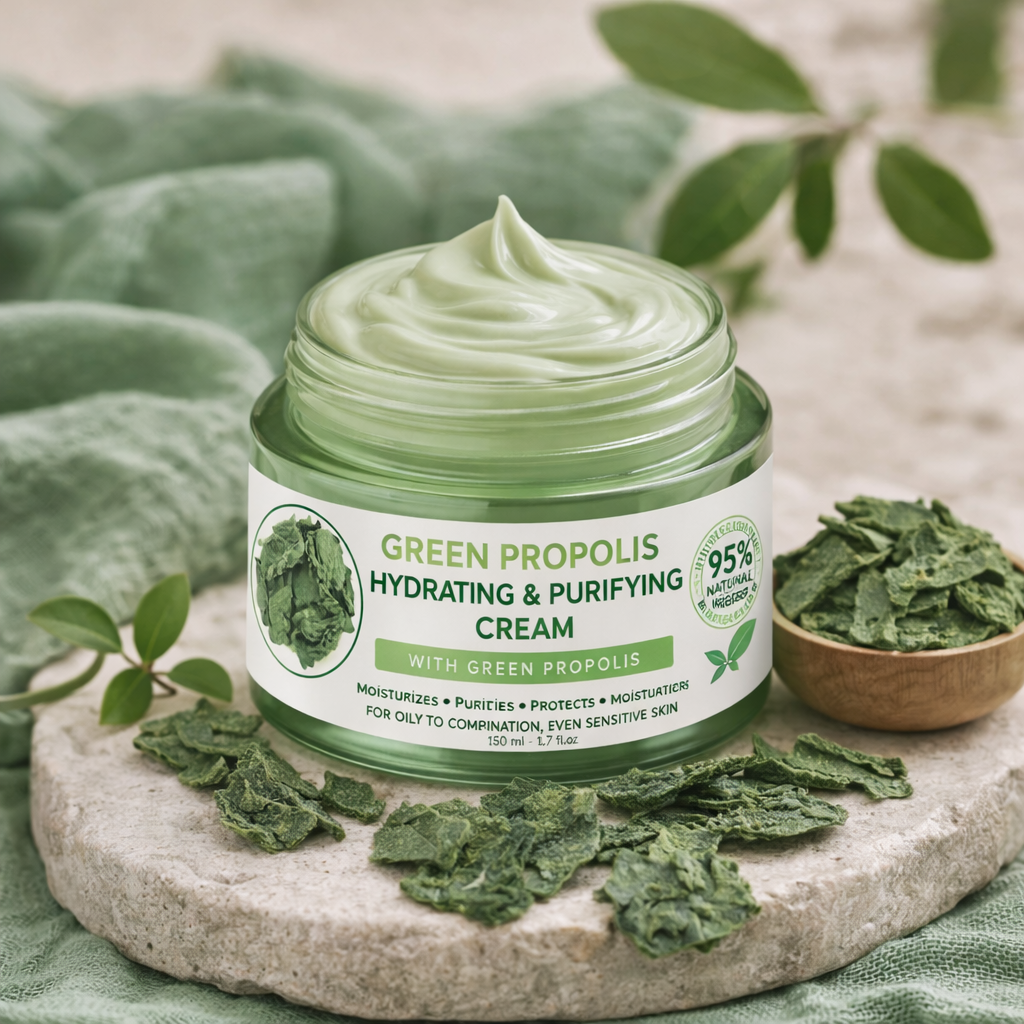
Green Propolis: A Strategic Natural Active for Cosmetic Formulations
Green propolis is gaining significant traction in the B2B cosmetics industry, driven by its unique biological properties and strong positioning as a high-value natural ingredient. Exclusively sourced from the state of Minas Gerais in Brazil, this type of propolis is collected by bees from Baccharis dracunculifolia, a plant rich in phenolic compounds. Its high content of artepillin C makes it a distinctive and powerful active for brands looking to develop effective, natural skincare products.
Why use green propolis in cosmetics?
Green propolis stands out due to its multiple functional benefits:
- Powerful antioxidant: helps combat oxidative stress, a key factor in skin aging
- Purifying and antibacterial: ideal for blemish-prone and oily skin
- Soothing and repairing: supports skin regeneration and reduces irritation
- Protective: strengthens the skin barrier against environmental aggressors
In a market where consumers increasingly demand natural, effective, and traceable ingredients, green propolis offers a premium positioning and strong storytelling potential.
Forms and applications in formulation
The integration of green propolis into cosmetic products depends on its extraction form. Three main types are commonly used:
1. Alcoholic extract (tincture)
- Solubility: hydroalcoholic
- Advantages: high concentration of active compounds, excellent stability
- Applications: toners, serums, anti-acne products
- Limitations: alcohol content may be irritating for sensitive skin
2. Glycerin extract
- Solubility: water-soluble
- Advantages: gentle, suitable for sensitive skin, compatible with natural formulations
- Applications: moisturizing creams, soothing skincare
- Limitations: slightly lower concentration of active compounds
3. Aqueous extract
- Solubility: water-soluble
- Advantages: very mild, ideal for clean and organic formulations
- Applications: eye contour products, baby care
- Limitations: lower stability, requires appropriate preservation systems
Choosing the right extract depends on product positioning, target audience, and regulatory constraints.
Example formulation: green propolis face cream (100 g)
Below is a sample formulation for a hydrating and purifying cream:
Phase A (water phase)
- Purified water: 65.0%
- Vegetable glycerin: 5.0%
- Green propolis glycerin extract: 3.0%
Phase B (oil phase)
- Jojoba oil: 8.0%
- Sunflower oil: 5.0%
- Emulsifier (e.g., Olivem 1000): 6.0%
- Cetyl alcohol: 2.0%
Phase C (actives and adjustments)
- Preservative (e.g., Cosgard): 0.8%
- Vitamin E: 0.5%
- Natural fragrance or essential oil (optional): 0.2%
- pH adjuster (lactic acid): q.s. pH 5.5
Manufacturing process
- Heat phases A and B separately to 70°C.
- Add phase B to phase A under stirring.
- Homogenize until a stable emulsion is formed.
- Cool below 40°C, then add phase C.
- Adjust pH and fill into suitable packaging.
A differentiating ingredient for cosmetic brands
Green propolis offers an excellent balance between natural origin, efficacy, and marketing appeal. It enables the development of high-value skincare products, particularly in dermocosmetic, organic, and premium segments. Its versatility across different extract forms makes it easy to incorporate into a wide range of formulations.
For manufacturers and formulators, investing in green propolis represents a strategic opportunity to meet evolving market trends while delivering innovative and high-performance cosmetic solutions.